In this article
Your switchboard is the central panel that distributes electricity from the grid to every circuit in your home. When it becomes outdated or overloaded, it can create a fire risk and leave your household without modern safety protection. This guide explains the seven most common signs your switchboard needs upgrading, what to do about each one, and when to book a switchboard upgrade with a licensed electrician.
What is a switchboard?
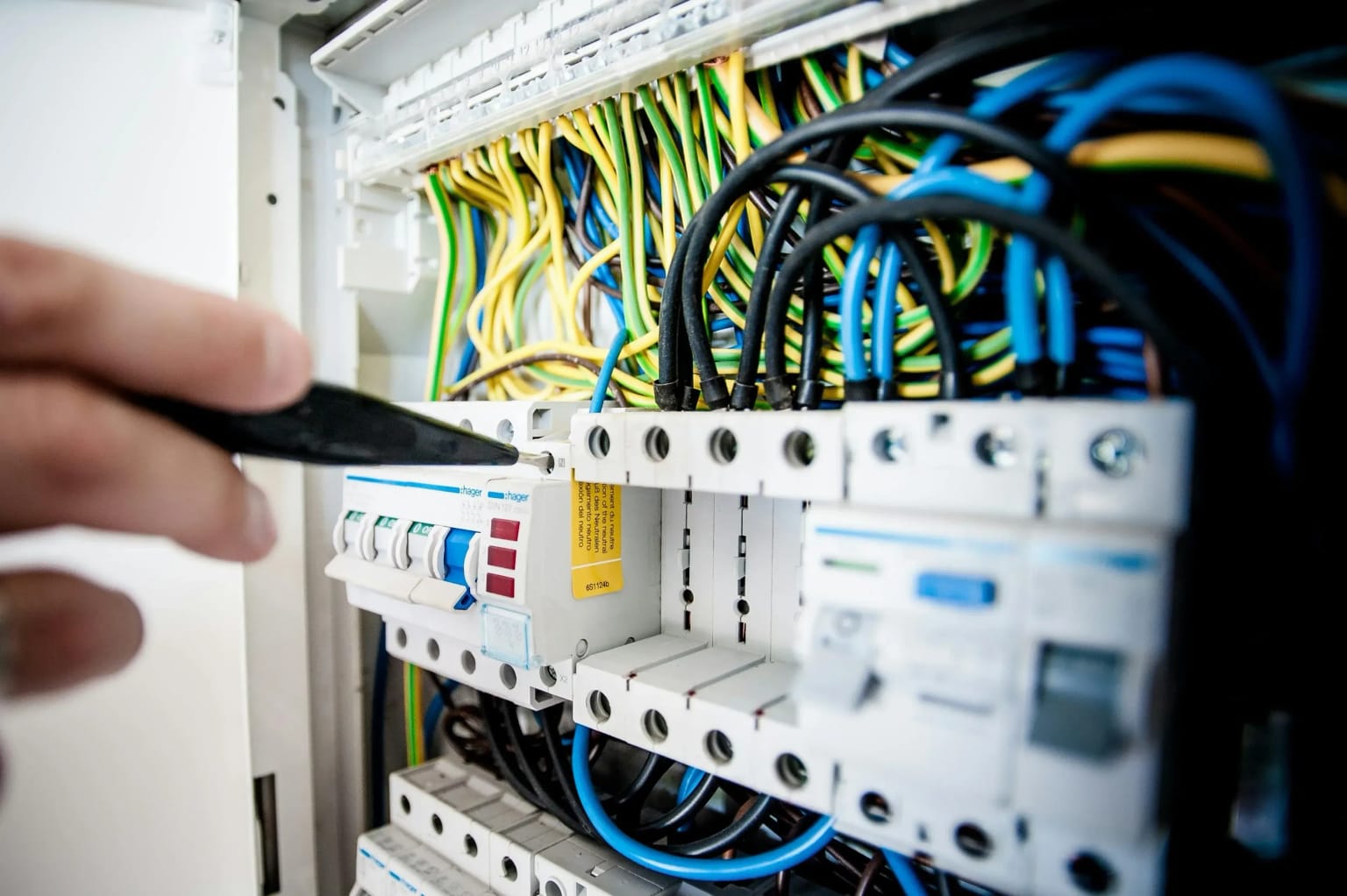
A switchboard (sometimes called a fuse box or electrical panel) is the enclosure that houses your home's circuit breakers, safety switches, and fuses. It receives power from the electricity network and splits it into the separate circuits that run your lights, power points, and appliances. A modern switchboard also protects you from electric shock and electrical fires, which is why an outdated one is a safety concern rather than just an inconvenience.
1. You still have ceramic fuses
Ceramic rewireable fuses are a sign of an older switchboard installed before modern standards. Unlike circuit breakers, ceramic fuses do not respond quickly enough to protect against many faults, and rewiring a blown fuse with the wrong wire gauge is dangerous. If your switchboard has porcelain fuse holders you pull out and rewire, it is due for an upgrade. Our comparison of an old fuse box vs a modern switchboard sets out exactly what changes when you replace one.
2. Your switchboard has no safety switches
A safety switch, or RCD (residual current device), cuts power within milliseconds when it detects electricity flowing where it should not, such as through a person. As Queensland's Electrical Safety Office puts it, "only safety switches save lives": circuit breakers and surge protectors protect appliances, not people. Queensland rental homes have needed safety switches on their power points since 2006, and since 2002 a licensed electrician has not been permitted to do installation work on a home without safety switches unless the work also includes fitting one (Electrical Safety Office). A board without them leaves you unprotected from electric shock. Where you do have them, pressing each test button every three months is one of the basic electrical safety checks at home. Adding RCDs usually means upgrading the switchboard to make room for them.
3. Safety switches or breakers trip frequently
An occasional trip is normal, but repeated tripping signals a problem. Frequent tripping often means your circuits are overloaded because the switchboard cannot handle your household's electrical demand, or that a fault exists somewhere in the wiring. A licensed electrician can determine whether the cause is an overloaded board that needs upgrading or a separate wiring fault.
4. Lights flicker or dim regularly
Flickering or dimming lights when you turn on an appliance can indicate that your switchboard and wiring are struggling to supply enough power. This is common in older homes where the electrical system was designed for far fewer appliances than a modern household runs. Persistent flickering is worth investigating before it points to a larger capacity problem.
5. The switchboard is warm, buzzing, or scorched
A switchboard should be silent and cool to the touch. Warmth, a buzzing sound, a burning smell, or scorch marks around the board are serious warning signs of loose connections or overheating, both of which are fire hazards. If you notice any of these, stop using the affected circuits and call a licensed electrician promptly.
6. You're adding solar, an EV charger, or major appliances
New high-demand equipment often needs switchboard capacity that older boards do not have. Ducted air conditioning or an electric hot water system such as a heat pump can take an older board past its limit. Solar, batteries and EV chargers are common enough triggers that they get their own section below. The Australian Government's energy information service covers those additions from the energy side; the board is what decides whether your home can carry them.
7. There's no room for new circuits
If your switchboard is full, there is no space to add the circuits a growing household needs. A board packed with breakers and no spare slots means any new circuit (for a renovation, a granny flat, or a new appliance) requires more capacity. Upgrading to a larger switchboard future-proofs your home for further additions.
Do I need a switchboard upgrade for solar, a battery or an EV charger?
Not always, but it is the most common reason a board gets upgraded. Before adding any of the three, a licensed electrician checks the same things:
- A spare way. Each addition needs room on the board for its own circuit and protection. A full board has to be rearranged or replaced.
- Capacity. The board and the supply have to carry the new load on top of what the house already draws.
- Safety switches. Since 2002, an electrician has not been permitted to do installation work on a home without safety switches unless the work also includes fitting one, so a board with none gets them as part of the job.
- Condition. Ceramic fuses, scorch marks or a warm board are fixed first, whatever you are adding.
Each addition then has its own pressure point:
- Solar: the inverter connects at the switchboard, so it needs a way and isolation there. If you are planning solar panels, have the board checked in the same visit.
- A battery: the battery system also connects at the board, and blackout backup means separating the backed-up circuits, which usually means board work. To qualify for the federal battery discount, existing solar must also meet electrical safety requirements; our Queensland battery rebate guide sets out the rules, and is a solar battery worth it covers whether one suits you.
- An EV charger: a charger draws a large current for hours, which is where an older board runs out of capacity. A load-managing charger can sometimes avoid a supply upgrade; see can I charge my EV at home. Board condition is the biggest variable in an EV charger installation quote.
If you are planning two of these, one board upgrade that covers both avoids two jobs and two outages. Our switchboard upgrade service covers what the job involves, and the board is assessed as part of the quote for any of them.
Do you legally need an electrician to upgrade a switchboard?
Yes. In Queensland, switchboard work must be carried out by a licensed electrician. It is illegal and dangerous to do it yourself. A licensed electrician ensures the upgrade meets the Australian wiring rules published by Standards Australia, includes safety switches, and gives you a certificate of testing and safety once the work is tested. The Electrical Safety Office also warns that an insurer may refuse a claim where unlicensed work is involved.
How much does a switchboard upgrade cost?
The cost of a switchboard upgrade depends on the size of the board, the number of circuits, and whether your wiring also needs attention. Because every home is different, the most accurate way to find out is a free, no-obligation quote where an electrician assesses your existing board and your household's needs. Our guide to what drives switchboard upgrade cost explains which variables move a quote the most.
Get in Touch
If you've noticed any of these warning signs, don't wait for a fault to become a hazard. Ryder Electrical Services provides switchboard upgrades across the Gold Coast up to Brisbane's north side. Call us on (07) 5241 1122 or get in touch for a free quote.
Frequently Asked Questions
How do I know if my switchboard has safety switches?
Look for a small "test" button on the devices in the board. A safety switch (RCD) has one; a plain circuit breaker does not. If nothing in the board has a test button, you almost certainly have no RCD protection, and the board needs attention. Queensland rental homes have needed safety switches on their power points since 2006, and since 2002 an electrician cannot do installation work on a home without safety switches unless the work also fits one.
Can I upgrade a switchboard myself?
No. In Queensland, switchboard work must be carried out by a licensed electrician. Beyond the legal position, incorrect work here is a fire and electrocution risk, and the Electrical Safety Office warns that an insurer may refuse a claim if unlicensed work is involved.
Do I need a switchboard upgrade for solar, a battery or an EV charger?
Often, but not always. The new equipment needs a spare way on the board, enough capacity for the extra load, and safety switch protection, and older boards often lack one or more of the three. A modern board with room to spare may need nothing. Doing any upgrade at the same time as the new installation avoids two separate jobs and two separate outages.
Is a switchboard that trips occasionally a problem?
One trip traced to a specific faulty appliance is normal protection working. Repeated tripping with no obvious cause is not. It usually points to a genuine fault, an overloaded circuit or a degraded device, and it should be tested rather than reset repeatedly.