In this article
The inverter converts the DC electricity your solar panels produce into the AC power your home uses, making it one of the most important parts of any system. There are three main approaches: a string inverter, microinverters, and optimisers. In short, a string inverter is the most cost-effective for simple roofs, while microinverters and optimisers manage each panel individually and handle shading better. This guide compares the three so you can choose the right setup for your roof before a solar panel installation. The Australian Government's energy information service covers how a grid-connected solar system fits together if you want the wider context.
How each option works
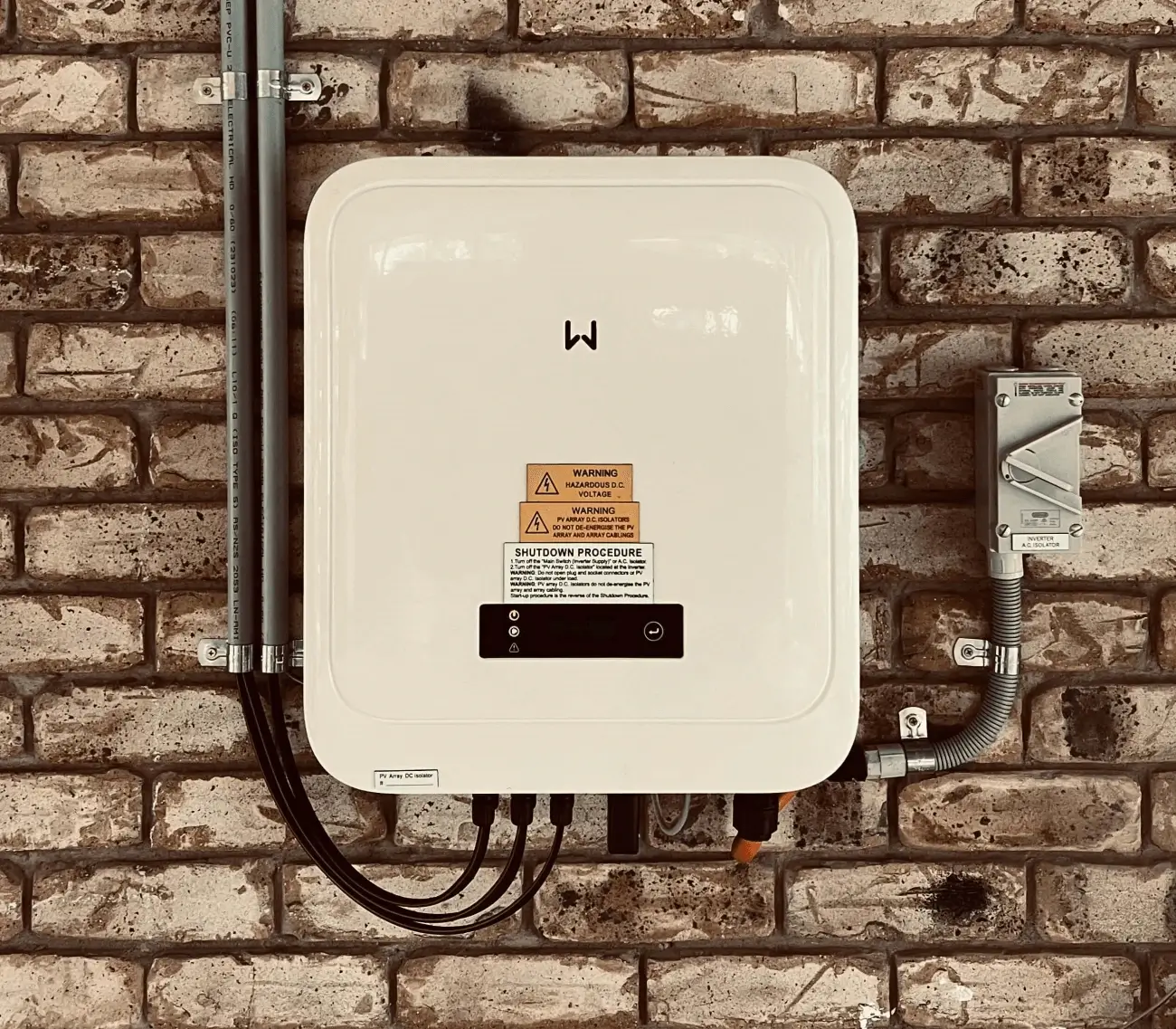
- String inverter: A single inverter, usually mounted on a wall, connected to a "string" of panels wired in series. It is the traditional and most common setup.
- Microinverters: A small inverter attached to each individual panel, converting power to AC right at the panel.
- Optimisers: Small devices attached to each panel that condition its output before sending it to a single central string inverter, a hybrid of the two approaches.
Performance with shading
This is where the options differ most. With a basic string inverter, panels are linked, so if one panel is shaded or underperforming, it can drag down the output of the whole string. Microinverters and optimisers work at the individual panel level, so a shaded or dirty panel only affects itself. The rest of the array keeps producing at full output. For roofs with trees, chimneys, or multiple orientations, panel-level electronics can meaningfully increase generation.
Cost, monitoring and maintenance
- String inverter: Lowest upfront cost and a simple design, but panel-level monitoring is limited and the central inverter is a single point of failure.
- Microinverters: Higher upfront cost, detailed panel-by-panel monitoring, and no single central inverter to fail, though there is more hardware on the roof.
- Optimisers: A middle ground on cost, with panel-level monitoring and shade management, still relying on one central inverter.
String vs micro vs optimiser at a glance
| Factor | String inverter | Microinverters | Optimisers |
|---|---|---|---|
| Upfront cost | Lowest | Highest | Middle ground |
| Shading performance | One shaded panel drags the string | Each panel works independently | Each panel works independently |
| Monitoring | Whole-system only | Detailed, panel by panel | Detailed, panel by panel |
| Single point of failure | Yes, the central inverter | No central inverter | Yes, the central inverter |
| Best for | Simple, unshaded, single-orientation roofs | Shaded or complex roofs | Partial shading or multiple roof aspects |
Which suits a Gold Coast roof?
For a simple, unshaded Gold Coast roof facing one direction, a quality string inverter delivers excellent results at the best price. Where homes have leafy surroundings, hillside blocks with varied roof angles, or shading from neighbouring buildings (common in established suburbs), optimisers or microinverters recover generation that a plain string setup would lose. The right choice depends entirely on your specific roof, and on whether storage is planned: a hybrid string inverter can take a battery directly, while a microinverter system usually pairs with an AC-coupled one. Our guide to the best solar battery for Queensland homes covers that side.
How to choose
The best option comes down to your roof's shading, its orientation, your budget, and how closely you want to monitor each panel. A licensed installer will assess your roof's aspects and shading and recommend the inverter setup that maximises your generation for the money. Whichever setup you land on, the inverter should appear on the Clean Energy Council approved products list, and the installer should be accredited to fit it. The inverter is only one part of the system. Our guide on what size solar system you need covers sizing the array itself, and what drives solar system cost in Queensland covers how the inverter choice lands in the final price. Our solar installation service covers the whole job. Ryder Electrical Services includes this assessment in a free, no-obligation quote.
Get in Touch
Planning a solar installation? Ryder Electrical Services designs systems with the right inverter setup for your roof across the Gold Coast, from simple string systems to panel-level optimisation. Call us on (07) 5241 1122 or get in touch for a free quote.
Frequently Asked Questions
Are microinverters better than a string inverter?
Microinverters handle shading better because each panel works independently, and they add panel-level monitoring, but they cost more. For a simple, unshaded roof a quality string inverter offers the best value.
Do I need optimisers for a shaded roof?
Optimisers or microinverters help on shaded or complex roofs because one shaded panel no longer drags down the whole string. For a single-orientation, unshaded roof they are usually unnecessary.
Which solar inverter is best value?
A string inverter has the lowest upfront cost and suits simple roofs. Optimisers sit in the middle, and microinverters cost the most but offer the most panel-level control and monitoring.