In this article
EV charger installation quotes on the Gold Coast vary more than most people expect, and the reason is rarely the charger itself. Two neighbours can buy the same unit and receive noticeably different installation prices, because the work required to get power to it safely differs.
This guide explains what actually drives that difference so you can read a quote properly and ask the right questions. We do not publish fixed prices, because a genuine quote depends on the specifics of your home and anyone quoting a flat figure sight-unseen is either guessing or leaving room for variations later.
1. Distance and cable route
The largest predictable variable is how far the charger is from your switchboard, and what the cable has to travel through to get there.
- A garage adjoining the meter box is the cheapest case: a short run, minimal labour.
- A garage at the opposite end of the house needs a longer cable in a larger size, because voltage drop over distance has to be compensated for.
- A detached garage or carport may need an underground run, which means trenching, conduit and reinstatement of whatever is on top of it.
- Routes through finished surfaces (rendered walls, tiled areas, concrete) cost more than a route through a roof space or an unlined garage wall.
Cable is also sized to the run, so a longer distance means both more cable and thicker cable.
2. Switchboard capacity and condition
This is the factor with the widest range of outcomes.
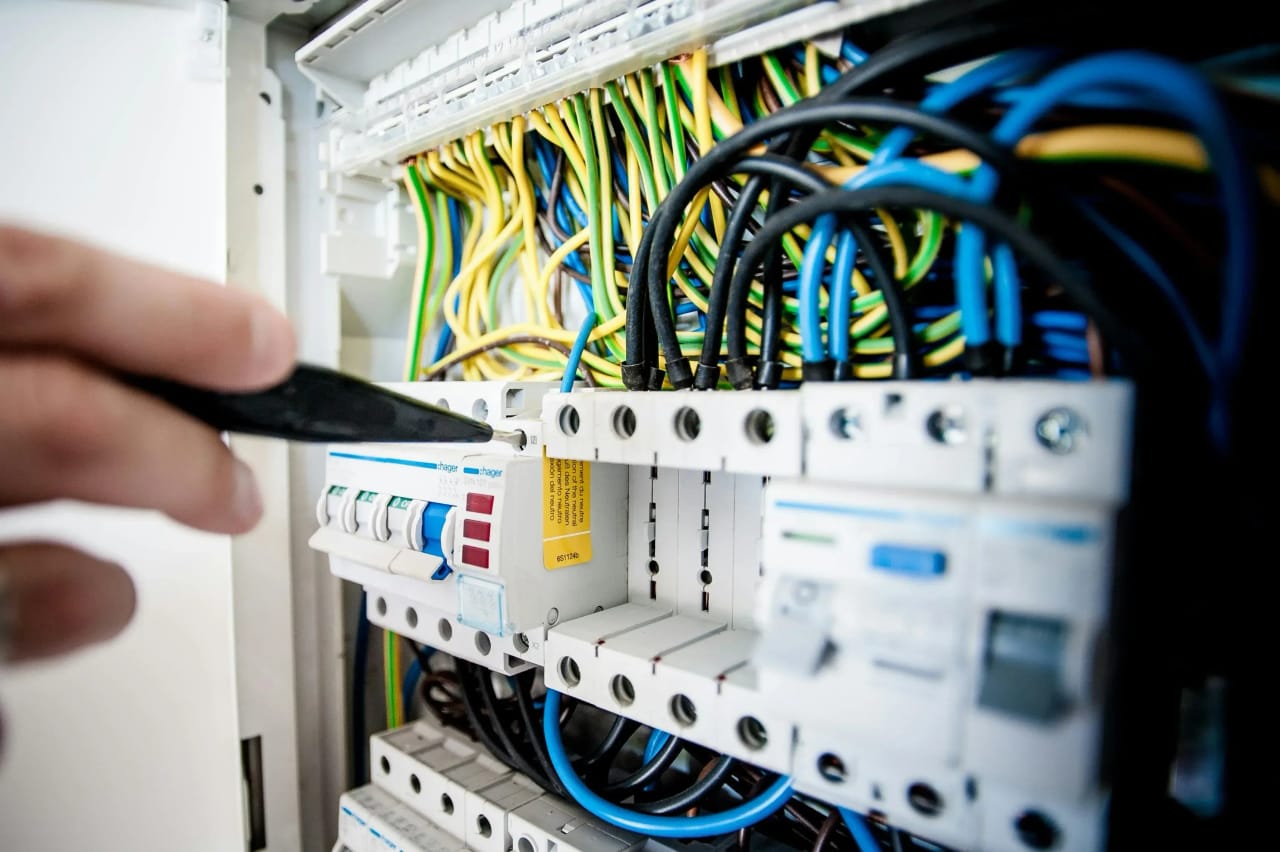
An EV charger requires a dedicated circuit with its own RCD protection. For that, your switchboard needs a spare way and enough capacity to carry the additional load.
- A modern board with spare ways: usually straightforward, and the charger circuit is simply added.
- A full board with no spare ways: needs rearranging or extending before the circuit can be added.
- An older board with ceramic fuses and no safety switch: needs replacing before a charger can be installed safely. This is a job in its own right and it is the largest single reason quotes differ.
If you are unsure which category yours falls into, 7 signs your switchboard needs upgrading describes what to look for, and old fuse box vs modern switchboard explains what changes when it is replaced.
3. Single-phase or three-phase supply
Most Australian homes are single-phase, which comfortably supports a 7kW charger. That charger adds roughly 40km of range per hour and fully recharges most EVs overnight.
A 22kW charger requires three-phase supply. If you already have three-phase, the incremental cost is modest. If you do not, having it brought in is a substantial piece of work involving your network distributor, and it is very rarely justified for charging alone, particularly since many EVs cannot accept 22kW AC anyway. The Australian Government's energy information service publishes general guidance on electric vehicles and charging at home.
7kW vs 22kW home EV charger covers this decision in detail.
4. Available capacity and load management
Even with a suitable switchboard, your total supply is finite. A house already running ducted air conditioning, an induction cooktop, a pool pump and a hot water system may not have headroom for a charger drawing its full current at dinner time.
There are two ways to solve that:
- A supply upgrade, which is the more expensive path and involves your distributor.
- Load management, where the charger monitors total household demand and throttles automatically when the house is busy, then returns to full speed later.
Load management adds hardware cost but is very often cheaper than the upgrade it avoids. Many households never notice it operating, because the car is charging overnight when demand is low regardless.
5. Charger selection
Chargers themselves range considerably, and the price tracks the features:
- Basic units: reliable charging, minimal configuration, no app.
- Smart chargers: scheduling, app control, usage data, and off-peak tariff integration.
- Solar-aware chargers: divert excess solar generation into the car rather than exporting it at a low feed-in rate. These cost more upfront and are the ones that most often pay for the difference if you have solar.
- Tethered vs socketed: a fixed cable is more convenient; a socket is tidier and lets you use your own cable.
If you are not sure what your off-peak window is, the Australian Energy Regulator covers how retail electricity tariffs are structured.
The best home EV charger in Australia compares the units we install.
6. Solar integration
If you have solar, integrating the charger changes the running cost rather than the installation cost. Charging from excess generation instead of importing from the grid is where the ongoing savings actually come from, and it usually requires a compatible smart charger plus a consumption meter at the switchboard.
Worth deciding before installation rather than retrofitting later.
7. Compliance and certification
Every compliant installation includes work that is not visible in the finished result: correct circuit protection to AS/NZS 3000 (the wiring rules published by Standards Australia), testing of the installed circuit, and a Certificate of Testing and Compliance. Some installations also require notification to your network distributor.
A quote that is materially cheaper than others is worth questioning on exactly these points. Uncertified EV charger work is both a safety risk and an insurance problem.
What to ask for in a quote
A quote you can actually compare should state:
- The charger make, model and capacity
- The cable route, length and size
- Whether switchboard work is included, and what kind
- Whether load management is included
- Whether the price allows for making good surfaces
- That certification and testing are included
- What is explicitly excluded
Getting an accurate figure for your home
The only way to price this properly is to look at your switchboard, your supply and the route to where the charger will go. Ryder Electrical Services quotes EV charger installations across the Gold Coast after assessing the site, so the number you receive is the number you pay.
Get in Touch
Thinking about a home EV charger? Ryder Electrical Services installs EV chargers across the Gold Coast, with a proper assessment of your switchboard and supply before we quote. Call us on (07) 5241 1122 or get in touch for a free, no-obligation quote.
Frequently Asked Questions
Why do EV charger installation quotes vary so much between homes?
Because the charger itself is only part of the job, and often not the larger part. The variable is the installation: how far the garage is from the switchboard, what the cable has to pass through to get there, whether your switchboard has spare capacity and a spare way, and whether the supply can carry the extra load at all. Two identical chargers on the same street can differ substantially once those factors are assessed.
Do I need to upgrade my switchboard to install an EV charger?
Sometimes. A charger needs a dedicated circuit with its own RCD protection, so the board needs a spare way and enough capacity. Modern boards in newer homes usually have both. Older boards frequently have neither, and a board with ceramic fuses and no safety switch will need replacing before a charger can be added safely. This is the single largest swing factor in a quote.
Is a three-phase supply needed for a home EV charger?
Not for most households. A 7kW single-phase charger fully recharges a typical EV overnight and suits the majority of Australian homes. Three-phase is only needed for a 22kW charger, and that speed benefits very few households. Your car also has to accept 22kW AC, and many do not. If you do not already have three-phase, having it brought in is a significant cost and rarely justified for charging alone.
Does load management add to the cost?
It adds hardware, but it frequently saves money overall. Load management lets a charger share your existing supply with the air conditioner, oven and pool pump by throttling automatically when household demand is high. Where the alternative is a supply upgrade, load management is usually much cheaper than the upgrade it avoids.
Can I get an accurate EV charger quote without a site visit?
You can get an indication, but not a reliable number. The factors that move the price most (cable route, switchboard condition, available capacity, supply type) cannot be established from a phone call. Any quote given without seeing the switchboard carries the risk of variations later. We assess it on site and quote the actual job.