In this article
Most switchboards look like a row of identical switches, so it is easy to assume they all do the same job. They do not. Circuit breakers and safety switches sit side by side on the board, but one protects the house and the other protects the people in it. This guide compares the two, sets out what Queensland law requires depending on the age and history of your home, and shows how to check what your own board has.
Safety switch vs circuit breaker at a glance
| Circuit breaker | Safety switch (RCD) | |
|---|---|---|
| What it protects | Wiring and the circuit | People and animals |
| What it detects | Overload and short circuit | Current leaking to earth |
| Typical cause it responds to | Too many appliances, a dead short | A faulty appliance, a damaged cable, a wet fitting, a person touching a live part |
| Speed that matters | Fast, but built for fire and overheating | A fraction of a second, built for shock |
| Test button | No | Yes, marked T or Test |
| Can one replace the other | No | No |
The Queensland Electrical Safety Office describes them the same way: safety switches turn off the power in a fraction of a second if a leakage of current is detected, while circuit breakers cut power when there is a high current fault or overload (Electrical Safety Office).
What a circuit breaker does
A circuit breaker is the modern replacement for the old rewireable fuse. Each one is rated for the wiring it feeds. If the current goes above that rating, because a circuit is overloaded or a fault creates a short circuit, the breaker opens and the power stops before the cable overheats. That is a fire-prevention job, and it is why a breaker that keeps tripping is worth taking seriously. The old fuse box vs modern switchboard comparison covers how boards moved from fuses to breakers.
A breaker does nothing about a shock. A person can receive a dangerous shock at a current far below the level that would make a breaker trip, which is the gap a safety switch exists to close.
What a safety switch does
A safety switch continuously compares the current going out on a circuit with the current coming back. In a healthy circuit they match. If part of the current finds another path to earth, through a faulty appliance, a damaged cable, a wet outdoor fitting, or a person, the two no longer match and the switch cuts the power immediately.
The Electrical Safety Office gives everyday examples of when that matters: a faulty power point or appliance, or accidentally hitting a live cable while drilling into a wall. It also stresses that safety switches can prevent a serious electric shock but are not a substitute for proper electrical maintenance and safe practices.
What Queensland law requires, by situation
The requirement depends on how old the home is and what has happened to it since. The Electrical Safety Office sets out this timeline:
| Situation | What is required |
|---|---|
| Home built after 1992 | Safety switches on all power points, with some exceptions for circuits supplying refrigerators or food freezers |
| New homes from 2000 | Safety switches on lighting circuits as well |
| Home sold or title transferred (since 2002) | Safety switches on the power points, fitted by the seller or by the buyer within three months of transfer. The seller declares on the contract and Form 24 whether one is present |
| Rental home (since 2006) | Safety switches on the power points. If a rental has none, the owner must install them as soon as possible |
| Electrical work on a home without them (since 2002) | A licensed electrician generally cannot do installation work unless a safety switch is fitted to the power points as part of the job, with limited exceptions such as emergencies |
The practical result is that the protection in any one home varies with its history. A house built in the 1980s that was sold in 2005 may have had power-point protection added. A home that has stayed with one owner and has never been rented or rewired may have none. The Electrical Safety Office says as much: the circuits protected in your home depend on its age, whether it has been sold since 2002, rented since 2006, or had other installation work done.
These are the legal minimums. The same source recommends considering safety switches on every circuit, including lights, air conditioning, the oven, hot water and pool equipment, even where those circuits are on a separate tariff. A safety switch only protects the circuits that run through it, so one switch covering the power points leaves the rest of the board unprotected.
How to check what your board has
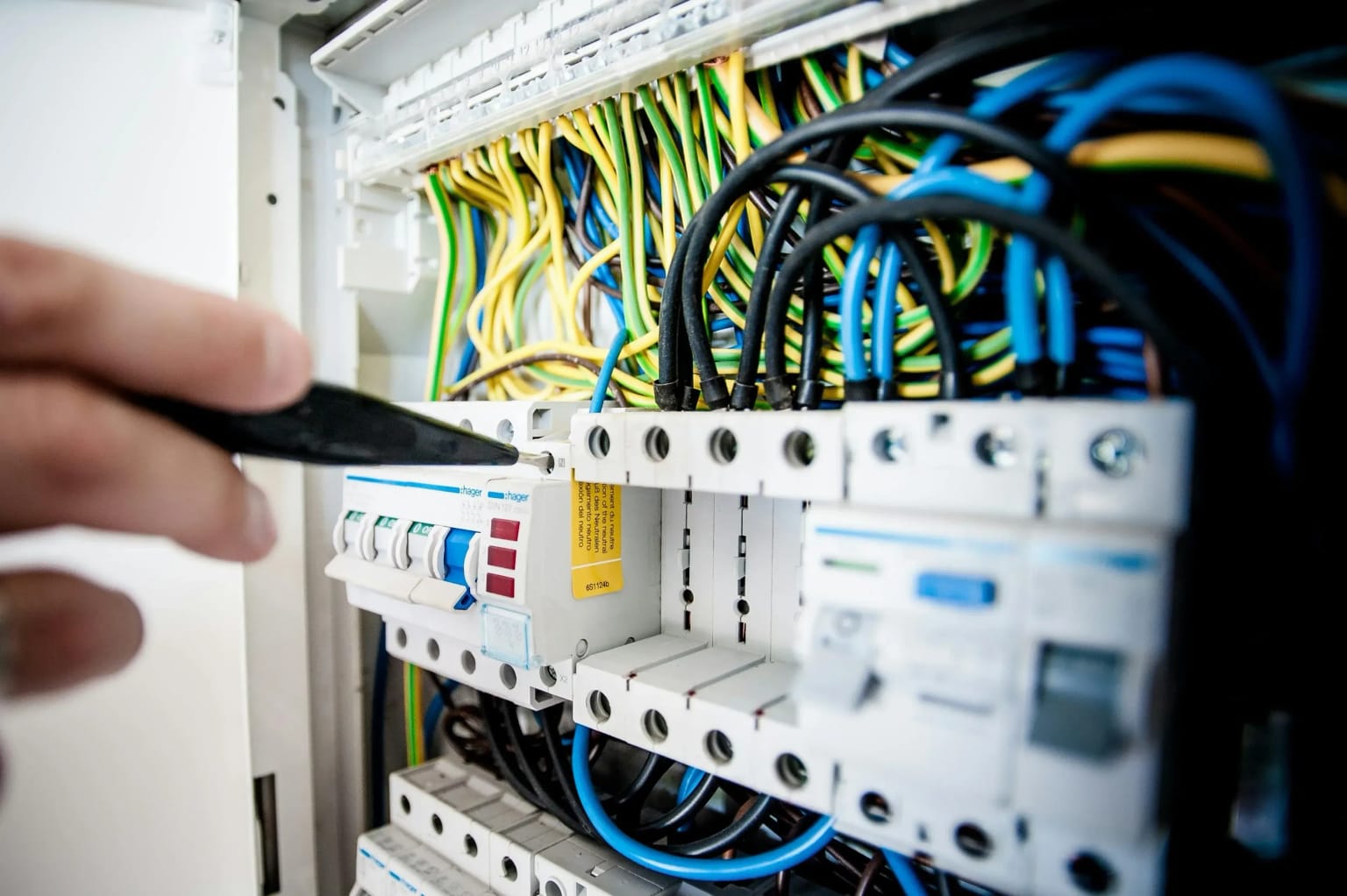
- Open the switchboard and look for a Test or T button on a device near the circuit breakers. It may be labelled safety switch, ELCB or RCD, and the button comes in various colours and sizes.
- Count them and note what they cover. One safety switch is not the same as whole-home protection. Switching a safety switch off and seeing which lights and outlets lose power shows you what it protects.
- Press the test button. The switch should flick off and cut the power to its circuits. If it does not, treat the circuit as unprotected and call an electrician.
- Reset it. Switch it back on. On circuits with a refrigerator or air conditioner, the Electrical Safety Office advises waiting two to three minutes before resetting to avoid appliance damage.
- Repeat every three months. A reminder on the day the electricity bill arrives works well.
If a safety switch trips during normal use, there may be a fault. Reset it once, and if it trips again, have an electrician look at it rather than working around it. The basics of electrical safety at home covers testing and common causes of tripping in more detail.
When a board needs upgrading
If the board has only circuit breakers, or only a single safety switch, adding protection often means more than fitting one device. Older boards may not have room for the extra units, may use rewireable fuses, or may have wiring that should be assessed before anything is added. The signs your switchboard needs upgrading post lists what to look for, and what affects the cost of a switchboard upgrade explains why quotes differ from home to home.
Portable safety switch units exist for use with a single appliance or tool, and are described by the Electrical Safety Office as suitable where a permanent installation is not available. They are a stopgap. They do not protect the fixed wiring and the rest of the house.
Who can fit a safety switch
Fitting a safety switch is electrical installation work, and in Queensland that must be done by a licensed electrician. It is not a do-it-yourself job, and a poorly fitted device can leave a circuit looking protected when it is not. Ryder Electrical Services (QLD electrical licence 92423) installs and tests safety switches across the Gold Coast, up to Brisbane's north side, as part of residential electrical work and switchboard upgrades. If a switch is tripping repeatedly or a test button does nothing, the emergency electrician line is open for urgent faults.
Legal details on this page follow the Queensland Electrical Safety Office guide "Electricity in the home" and were last verified on 2 October 2026. Rules change, so confirm your own situation with a licensed electrician or your solicitor if you are buying or selling.
Get in Touch
Not sure how many circuits your safety switches actually protect? Ryder Electrical Services can test your board, tell you plainly what is and is not covered, and quote any upgrade. Call us on (07) 5241 1122 or get in touch for a free, no-obligation quote.
Frequently Asked Questions
What is the difference between a safety switch and a circuit breaker?
A circuit breaker protects the wiring in a circuit from overload and short circuits, while a safety switch protects people from electric shock. A safety switch monitors the current flowing through a circuit and cuts the power in a fraction of a second if some of it leaks away, for example through a person. A circuit breaker does not detect that kind of leakage.
Is a safety switch compulsory in Queensland?
In most homes, yes, at least on the power points. Safety switches have been compulsory on power points in new Queensland homes since 1992 and on lighting circuits in new homes since 2000. They are also required on the power points of rental homes (since 2006) and of homes that are sold (since 2002). Older homes that have not been sold, rented or rewired since those dates may still be without them.
Do I need a safety switch if I am selling my house in Queensland?
If the home has no safety switch on its power points, either the seller fits one or the buyer must fit one within three months of the property transfer date. The seller must declare on the sales contract and the Form 24 Property Transfer whether a safety switch is present. This applies to any title transfer, not just sales.
How do I know if my home has a safety switch?
Look inside the switchboard for a Test or T button near the circuit breakers. The device may also be labelled safety switch, ELCB or RCD. If you are unsure, a licensed electrician can check which circuits are actually protected, because a safety switch only protects the circuits connected through it.
Can a circuit breaker replace a safety switch?
No. A circuit breaker cannot detect the small leakage current that causes an electric shock, so it will not trip in time to protect a person. The two devices do different jobs, and a modern board is expected to have both. Some modern devices combine the two functions in one unit, which an electrician can advise on for your board.